
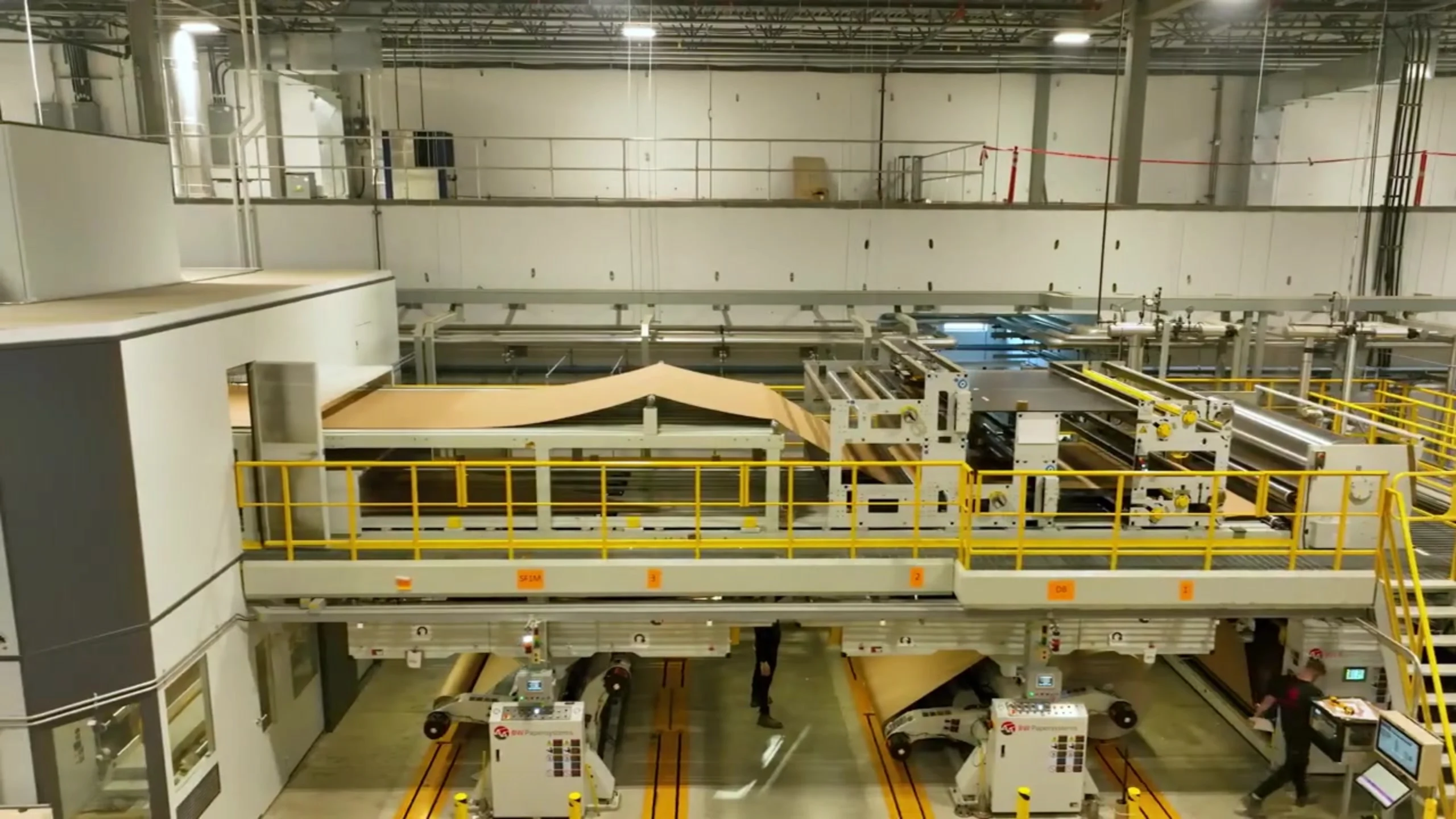
Packaging as a Logistics Enabler
Industrial logistics systems rely on materials and processes that are predictable, scalable, and resilient. From inbound raw materials to outbound finished goods, packaging plays a direct role in how efficiently products move through the supply chain. In this environment, corrugated packaging for industrial logistics continues to serve as a foundational element.
Despite rapid advancements in logistics technologies—such as automation, tracking systems, and data integration—the need for reliable physical packaging has not diminished. Corrugated packaging remains essential because it combines structural performance with operational efficiency. Across North America, industrial sectors continue to depend on corrugated solutions to protect goods, streamline handling, and support large-scale logistics operations. Manufacturers operating within this ecosystem, including companies such as CanCorr in Western Canada, work within these same logistics-driven requirements.
The Role of Packaging in Industrial Logistics Operations
Packaging is not simply a protective layer; it directly influences handling efficiency, transportation reliability, and cost control. Industrial logistics requires packaging materials that can perform consistently across multiple stages of movement and storage.
Corrugated packaging supports logistics operations by:
- Protecting products during transport and handling
- Enabling efficient stacking and warehouse storage
- Integrating with automated material handling systems
- Reducing product damage and loss
In high-volume logistics environments, consistent packaging performance helps ensure smooth throughput and minimizes operational disruptions.
Durability and Protection in Demanding Environments
Industrial logistics exposes packaging to compression forces, vibration, repeated handling, and environmental variation. Packaging materials must be engineered to withstand these conditions without compromising product integrity.
Corrugated packaging provides:
- Strong compression resistance for stacking
- Impact absorption through fluted structures
- Load-bearing capability for long-distance transport
- Adaptability across diverse logistics scenarios
Different flute profiles and board constructions allow corrugated packaging to be matched precisely to specific industrial logistics requirements. This flexibility supports performance without excessive material usage.
Standardization and Operational Efficiency
Standardization is a key driver of efficiency in industrial logistics. Corrugated packaging supports standardized dimensions and configurations that simplify material handling across facilities and regions.
Standardized corrugated packaging enables:
- Faster warehouse processing
- Improved pallet utilization
- Predictable loading and unloading procedures
- Compatibility with automated logistics equipment
These efficiencies reduce complexity and support scalable logistics systems across North America.
Compatibility with Automated Logistics Systems
Automation has become increasingly central to industrial logistics operations. Conveyors, robotic palletizers, automated storage systems, and sorting equipment all rely on packaging materials with consistent geometry and predictable performance.
Corrugated packaging is well-suited to automated systems because it:
- Maintains dimensional consistency
- Performs reliably under mechanical handling
- Supports high-speed processing environments
- Reduces equipment disruptions caused by packaging failure
Facilities served by corrugated sheet manufacturers such as CanCorr operate within logistics systems where this level of compatibility is essential.
Weight Optimization and Transportation Efficiency
Transportation efficiency is a major consideration in industrial logistics. Corrugated packaging offers an effective balance between strength and weight, supporting efficient transportation without sacrificing protection.
Optimized corrugated packaging helps:
- Reduce overall shipment weight
- Improve load density
- Lower fuel consumption per unit shipped
- Minimize transportation-related emissions
These benefits are particularly valuable in long-distance logistics networks common across North America and Western Canada.
Supporting Just-in-Time Logistics Models
Many industrial supply chains operate under just-in-time (JIT) principles, where materials are delivered precisely when needed to minimize inventory holding. Packaging reliability is critical in these systems.
Corrugated packaging supports JIT logistics by:
- Delivering predictable performance across shipments
- Enabling efficient handling and storage
- Reducing risk of damage-related delays
- Supporting fast and consistent turnaround times
Manufacturers and logistics operators depend on corrugated packaging to maintain operational continuity within time-sensitive supply chains.
Sustainability Considerations in Industrial Logistics
Sustainability has become an increasingly important factor in logistics decision-making. Packaging materials are evaluated not only on performance and cost, but also on environmental impact.
Corrugated packaging supports sustainable logistics by:
- Utilizing renewable and recyclable materials
- Achieving high recovery and recycling rates
- Reducing dependence on non-renewable packaging materials
- Aligning with circular economy principles
Corrugated packaging’s environmental profile makes it a practical choice for industrial logistics operations seeking to reduce their footprint without compromising reliability. Manufacturers such as CanCorr align with these broader industry sustainability expectations.
Regulatory Alignment and Compliance
Industrial logistics operations must comply with evolving environmental and operational regulations across North America. Packaging materials that align with regulatory expectations reduce compliance risk.
Corrugated packaging helps organizations:
- Meet environmental packaging requirements
- Support corporate sustainability reporting
- Align with customer and stakeholder expectations
- Adapt to changing regulatory frameworks
This regulatory alignment reinforces corrugated packaging’s continued relevance in regulated industrial environments.
Versatility Across Industrial Applications
One of the reasons corrugated packaging remains essential for industrial logistics is its versatility. Corrugated solutions can be adapted to a wide range of industrial applications without extensive redesign.
Corrugated packaging supports:
- Manufacturing and assembly operations
- Warehousing and distribution
- Export and cross-border logistics
- Diverse product sizes and weights
This adaptability simplifies logistics planning and reduces the need for multiple packaging systems.
Reducing Total Cost of Ownership in Logistics
Industrial logistics decisions are often based on total cost of ownership rather than unit cost alone. Corrugated packaging contributes to cost efficiency by reducing downstream risks and inefficiencies.
Cost-related advantages include:
- Lower product damage rates
- Improved handling efficiency
- Reduced waste and rework
- Predictable performance across logistics cycles
These factors make corrugated packaging a cost-effective solution for large-scale logistics operations.
Corrugated Packaging and Supply Chain Resilience
Resilient supply chains require materials that are widely available, scalable, and adaptable. Corrugated packaging meets these requirements through established manufacturing capacity and material availability.
Corrugated packaging supports resilience by:
- Being produced at industrial scale
- Utilizing widely available raw materials
- Supporting consistent supply during demand fluctuations
- Adapting to changing logistics requirements
This resilience is critical for industrial logistics networks operating across North America.
Corrugated Packaging in the North American Logistics Landscape
North American logistics networks are characterized by long transport distances, diverse industrial sectors, and complex distribution systems. Corrugated packaging continues to support these networks by enabling efficient, reliable movement of goods.
From manufacturing hubs to regional distribution centers, corrugated packaging remains an integral part of industrial logistics infrastructure. Regional manufacturers such as CanCorr operate within this broader logistics landscape, supporting packaging supply where reliability and consistency are required.
Conclusion: An Essential Component of Industrial Logistics
Industrial logistics depends on packaging solutions that deliver consistent performance, efficiency, and adaptability. Corrugated packaging for industrial logistics continues to meet these demands through durability, compatibility with automated systems, and alignment with sustainability goals.
As supply chains grow more complex and expectations continue to rise, corrugated packaging remains an essential element of industrial logistics across North America. Manufacturers like CanCorr, operating within this evolving environment, reflect how reliable corrugated solutions continue to support resilient, efficient, and future-ready logistics systems.