
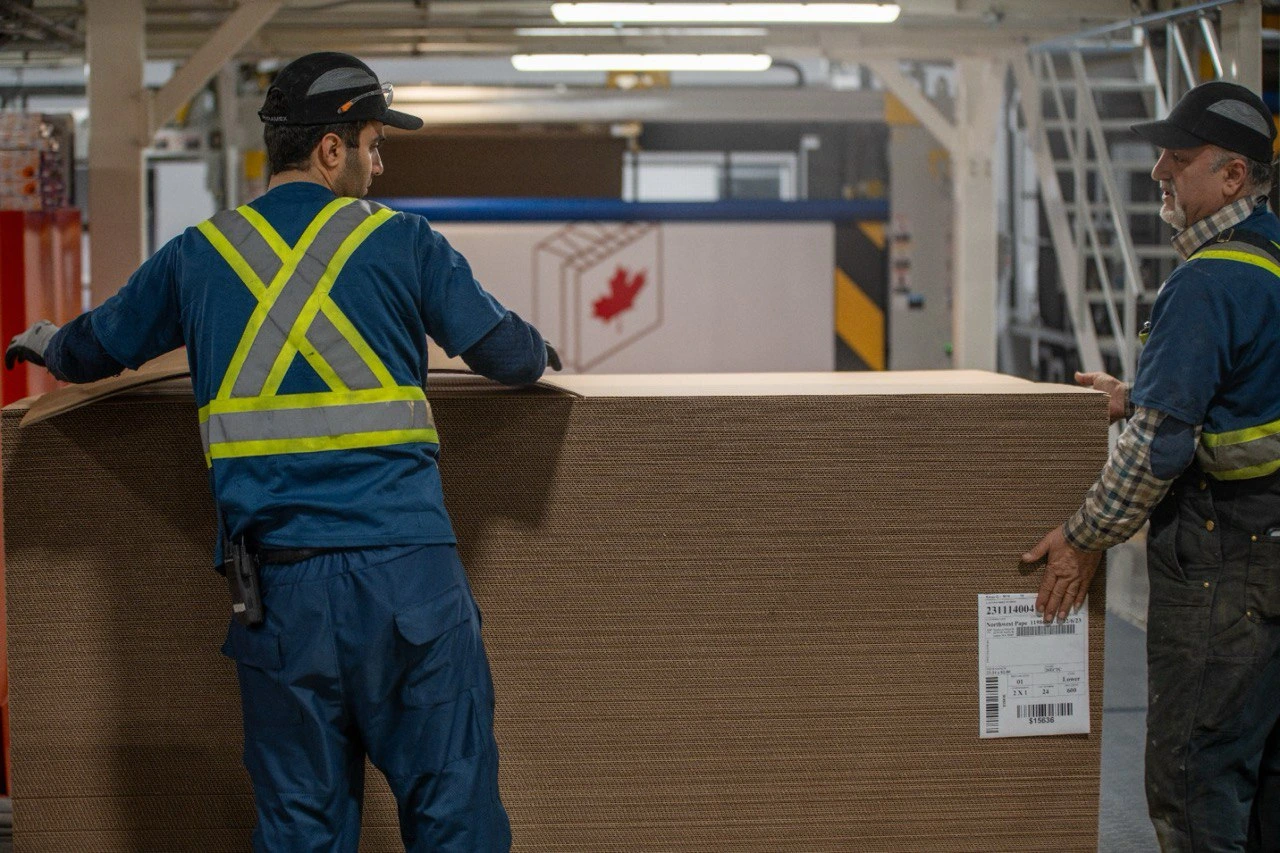
The Evolution of Corrugated Manufacturing in North America
Corrugated manufacturing in North America has evolved into a highly specialized industrial process that supports some of the most complex supply chains in the global packaging industry. What began as a relatively simple method of producing protective paperboard has transformed into a technologically advanced manufacturing discipline driven by scale, precision, and sustainability.
Today, corrugated manufacturing across North America plays a foundational role in industrial logistics, food and beverage distribution, e-commerce fulfillment, and large-scale manufacturing. Companies operating in this sector are expected to deliver consistent quality at high volumes while meeting increasingly strict environmental and operational standards.
As demand continues to grow, corrugated sheet manufacturing has become less about basic production and more about integrated systems—where technology, logistics, and environmental responsibility work together to support modern industrial packaging needs. Manufacturers such as CanCorr, operating within the Canadian corrugated manufacturing landscape, reflect this broader industry shift toward scale, efficiency, and responsible operations.
Understanding Industrial Corrugated Manufacturing
At its core, corrugated manufacturing involves combining linerboard and corrugated medium to create structured sheets that offer strength, flexibility, and protection. These sheets form the foundation of countless packaging applications used throughout North America.
In industrial corrugated production, manufacturing facilities are designed to operate at scale. High-speed corrugating lines, wide-format sheet capability, and multiple flute configurations allow manufacturers to serve a wide range of industries while maintaining efficiency and consistency.
Modern corrugated manufacturing operations typically support:
• Single wall and double wall sheet structures
• Multiple flute profiles, including B, C, E, F, T, and micro-flute
• Wide sheet formats for industrial applications
• Continuous, high-volume production cycles
This flexibility enables manufacturers to meet the evolving requirements of packaging converters and industrial customers across North America, including those served by regional producers like CanCorr in Western Canada.
The Role of Advanced Technology in Corrugated Manufacturing
Technology has become a defining driver of advancement in corrugated manufacturing North America. Today’s leading facilities rely on advanced corrugating systems equipped with automation, precision controls, and real-time monitoring.
These technologies allow manufacturers to maintain tighter control over:
• Flute geometry and board thickness
• Strength and performance consistency
• Material usage and waste reduction
• Energy efficiency throughout production
Advanced corrugating technology also supports faster changeovers between product specifications, enabling manufacturers to respond efficiently to varying customer requirements. In corrugated manufacturing Canada, companies such as CanCorr invest in modern equipment to support consistent output while aligning with regional supply chain needs.
High-Capacity Production and Scalability
One of the most critical factors in successful corrugated manufacturing across North America is production capacity. High-capacity operations allow manufacturers to support long-term supply contracts, manage peak demand, and maintain consistent delivery schedules.
Industrial-scale corrugated manufacturing facilities are designed to:
• Produce large volumes without compromising quality
• Minimize downtime through automation and preventive maintenance
• Support wide-format and heavy-duty sheet production
• Ensure repeatability across production runs
Facilities operating in established industrial hubs—such as those in Western Canada where CanCorr is located—benefit from proximity to logistics networks that further support scalable production and distribution.
Corrugated Manufacturing and Sustainable Operations
Sustainability has become an essential consideration within the packaging manufacturing industry. Across North America, corrugated manufacturing is increasingly evaluated based on environmental performance as well as operational output.
Modern corrugated manufacturing facilities are adopting practices that support:
• Renewable and responsibly sourced raw materials
• Fully recyclable and biodegradable corrugated sheets
• Reduced water usage through closed-loop systems
• Improved energy efficiency compared to older installations
Sustainable corrugated manufacturing supports a circular economy by enabling packaging materials to be recovered, recycled, and reintroduced into the production cycle. Manufacturers such as CanCorr integrate these principles into their operations to align industrial performance with environmental responsibility.
Quality Control and Process Consistency
Consistency is a cornerstone of industrial corrugated production. Packaging converters rely on uniform sheet quality to ensure efficiency in cutting, printing, and assembly processes downstream.
Advanced process control systems allow corrugated manufacturers to:
• Monitor production parameters in real time
• Adjust variables to maintain consistent output
• Reduce variation between production batches
• Ensure compliance with performance requirements
In corrugated manufacturing North America, facilities that prioritize process control are able to build long-term partnerships based on trust and reliability. This focus on consistency is reflected across the industry, including in Canadian manufacturing operations such as CanCorr.
Logistics and Distribution in Corrugated Manufacturing
Efficient logistics play a vital role in supporting corrugated manufacturing across North America. High-capacity production must be matched by reliable delivery systems capable of meeting tight timelines.
Modern corrugated manufacturers invest in logistics infrastructure that supports:
• Just-in-time delivery models
• Regional distribution efficiency
• Reduced transportation waste
• Improved scheduling and tracking accuracy
In regions like Western Canada, where geographic distances can influence supply chain performance, manufacturers such as CanCorr rely on coordinated logistics systems to support timely and predictable deliveries.
Regional Advantages in Corrugated Manufacturing Canada
Canada plays an important role in the North American corrugated manufacturing landscape. Facilities located in strategic industrial hubs benefit from proximity to ports, transportation networks, and major manufacturing centers.
In corrugated manufacturing Canada, particularly in Western Canada, manufacturers are positioned to serve diverse industrial markets while maintaining efficient supply chains. Strategic location reduces transportation complexity and supports faster turnaround times for customers across the region.
These regional advantages allow Canadian corrugated manufacturers, including CanCorr, to contribute meaningfully to the broader North American packaging industry.
The Future of Corrugated Manufacturing in North America
Looking ahead, corrugated manufacturing across North America will continue to evolve in response to technological innovation, sustainability expectations, and changing market demands.
Future advancements are expected to focus on:
• Greater automation and data-driven manufacturing
• Enhanced energy efficiency and resource management
• Increased flexibility in product specifications
• Stronger integration with logistics and supply chain systems
Manufacturers that invest in these areas—such as established operators within Canada’s corrugated sector—will be well positioned to support long-term industry growth.
Conclusion: Advancing Corrugated Manufacturing with Confidence
Corrugated manufacturing in North America has become a highly advanced industrial discipline that supports the backbone of modern packaging and logistics systems. Through high-capacity production, advanced technology, and sustainable operations, corrugated sheet manufacturing continues to meet the evolving needs of industrial customers.
As demand for reliable, efficient, and environmentally responsible packaging grows, corrugated manufacturing North America will remain essential to the success of supply chains across the continent. Companies like CanCorr, operating within this evolving landscape, reflect how scale, consistency, and responsible manufacturing practices continue to shape the future of the packaging manufacturing industry.